Creamy Roasted Cauliflower Soup
Highlighted under: Warming Food Recipes
I’ve always loved a good soup, but this Creamy Roasted Cauliflower Soup takes my passion to the next level. The combination of roasting the cauliflower before blending it into a velvety soup brings out a rich nuttiness that is simply irresistible. I often serve it on chilly evenings, and it never fails to comfort and warm me up. This recipe is straightforward yet deeply satisfying, making it easy to whip up for both family dinners and cozy nights in.
When I first decided to make this soup, I was pleasantly surprised by how simple yet flavorful it was. Roasting the cauliflower brings out a depth of flavor that boiling just can’t match. I enjoyed watching the cauliflower turn a lovely golden color in the oven, which only elevated the taste. Adding a splash of lemon juice at the end is my secret trick to brighten the flavor, and trust me, it makes a considerable difference!
After making it a few times, I fine-tuned the recipe to balance the creaminess with just the right amount of seasoning. The creamy texture is achieved through a combination of coconut milk and vegetable broth, giving it a rich mouthfeel without overpowering the natural sweetness of the cauliflower. Each spoonful feels like a warm hug on a cool day!
Why You'll Love This Recipe
- Rich roasted flavor that elevates the humble cauliflower
- Lusciously creamy yet dairy-free option
- Perfectly comforting for cold days and gatherings
The Art of Roasting Cauliflower
Roasting cauliflower is a transformative technique that brings out its natural sweetness and nutty flavors. When tossed in olive oil and seasoned appropriately with salt and pepper, the cauliflower develops a beautiful golden-brown crust. Aim for even pieces to ensure they roast uniformly. If you notice that some pieces are browning too quickly, you can remove them from the pan earlier to avoid burning. This initial step lays the foundation for a deeply flavored soup that you'll truly savor.
Spreading the cauliflower out on the baking sheet also facilitates even roasting. Ensure that the individual florets are not crowded, which can lead to steaming rather than roasting. Keep an eye on them as they approach the 20-minute mark; the edges should be crisp and slightly caramelized, giving you that rich roasted flavor. Feel free to experiment with additional spices, such as smoked paprika or cumin, for a unique flair.
Creating a Luscious Texture
The key to achieving a luxuriously creamy texture without dairy lies in the blending process. Using an immersion blender is my preferred method; it allows you to puree the soup directly in the pot, making cleanup a breeze. If using a countertop blender, be sure to cool the soup slightly before blending in batches to prevent pressure buildup, which can lead to messy explosions. Aim for a silky consistency, and don't shy away from adjusting your blending time to suit your preference.
Coconut milk adds a delightful creaminess, but you can also use alternatives like cashew cream or blended silken tofu for different flavor profiles. If you prefer a lighter soup, substitute half the coconut milk with additional vegetable broth. Always taste as you go, especially after adding the coconut milk, to balance the richness with the brightness from the lemon juice. This step is crucial for creating a harmonious flavor in your soup.
Serving Suggestions and Variations
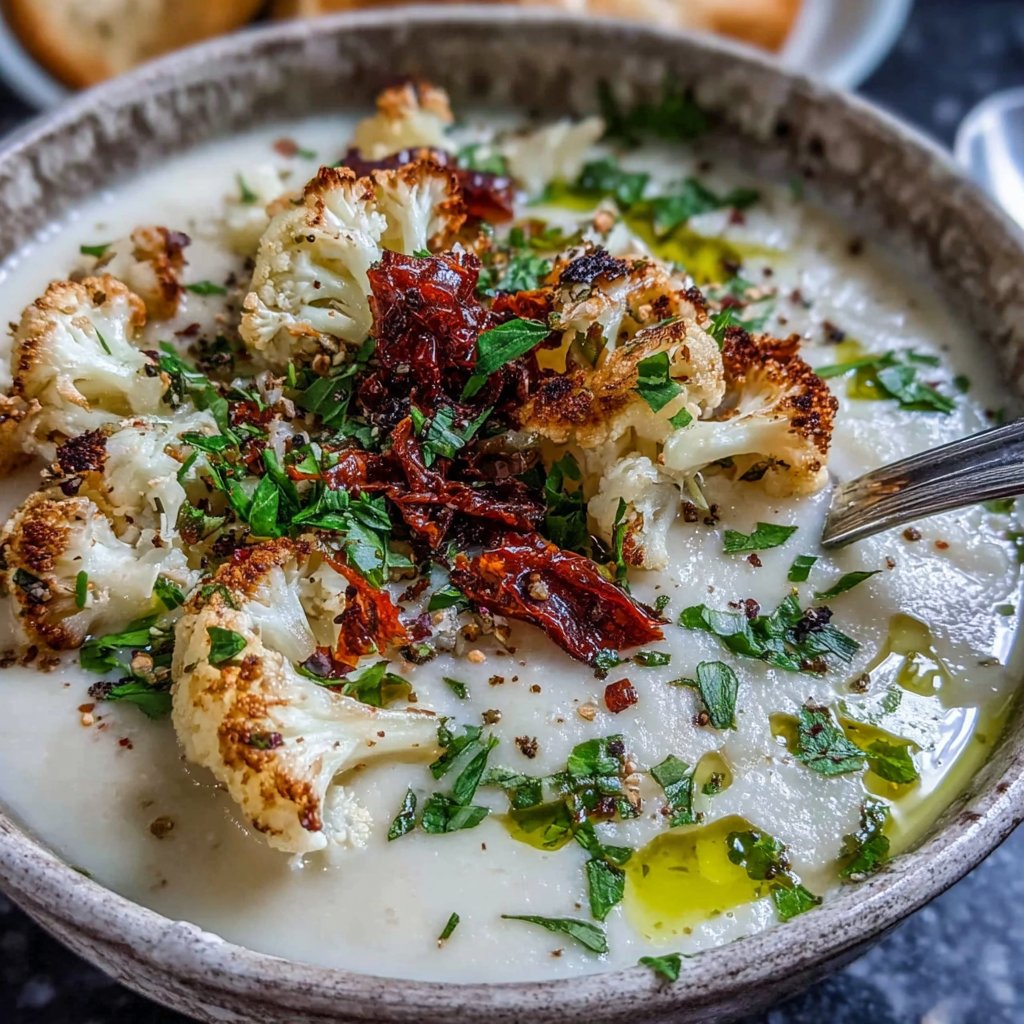
To elevate your Creamy Roasted Cauliflower Soup, consider garnishing it with toasted pumpkin seeds or crispy chickpeas for crunch. A sprinkle of fresh herbs, such as chives or parsley, not only adds color but also a fresh flavor that cuts through the richness. A drizzle of high-quality extra virgin olive oil right before serving can enhance the taste and give a gourmet touch.
This soup is versatile and can be adapted based on seasonal ingredients or dietary preferences. For instance, adding a handful of cooked spinach or kale can boost the nutritional value and add vibrant color. You can even incorporate roasted garlic during the sautéing step for an additional layer of flavor. If you're making it in advance, store it in an airtight container in the refrigerator for up to three days or freeze portions for a quick meal on a busy day.
Ingredients
Ingredients
Soup Base
- 1 large head of cauliflower, chopped
- 2 tablespoons olive oil
- 1 onion, diced
- 3 cloves garlic, minced
- 4 cups vegetable broth
- 1 cup coconut milk
- Salt and pepper to taste
- 1 tablespoon lemon juice
Make sure to adjust the seasoning as per your taste preference.
Instructions
Instructions
Roast the Cauliflower
Preheat your oven to 400°F (200°C). Toss the chopped cauliflower with olive oil, salt, and pepper, then spread it on a baking sheet. Roast for 25 minutes, or until golden brown.
Sauté Aromatics
In a large pot, heat a little olive oil over medium heat. Add the diced onion and sauté until translucent, about 5 minutes. Stir in the minced garlic and cook for an additional minute until fragrant.
Combine and Simmer
Once the cauliflower is roasted, add it to the pot with the onions and garlic. Pour in the vegetable broth, bringing the mixture to a simmer. Let it cook for 10 minutes.
Blend It Up
Use an immersion blender to puree the soup until smooth. Stir in the coconut milk and lemon juice, adjusting the seasoning as desired.
Serve
Ladle the soup into bowls and enjoy warm, garnished with fresh herbs or a drizzle of olive oil if desired.
This soup can be stored in the refrigerator for up to 3 days.
Pro Tips
- For an extra layer of flavor, consider adding spices like cumin or smoked paprika while roasting the cauliflower.
Key Techniques for Success
When sautéing the onions, aim for a translucent color to unlock their sweetness before adding garlic. Be cautious not to burn the garlic; cooking it just until fragrant will prevent bitterness, which can detract from the soup's overall flavor. Adjusting the heat to low-medium during this step can make a noticeable difference.
Considering the cooking times is essential; ensuring you simmer the broccoli-cauliflower blend long enough allows the flavors to meld beautifully. Ten minutes should suffice, but you can simmer longer for a more integrated taste. If you're unsure about seasoning, taste during the simmering stage—it's easier to adjust than after blending.
Storing and Reheating Tips
If you have leftover soup, store it in a sealed container in the refrigerator for up to three days. To reheat, gently warm it on the stove over low heat, stirring occasionally to prevent sticking. If the soup has thickened, adding a splash of vegetable broth or water can help return it to the desired consistency.
For longer storage, this soup freezes exceptionally well. Ensure it has cooled completely before transferring it into freezer-safe containers. When reheating, thaw overnight in the refrigerator or use the microwave. Remember to stir well post-reheating; the texture may need attention to regain its creamy state. Avoid freezing garnishes, as they can become soggy upon thawing.
Ingredient Substitutions and Add-Ins
You can easily customize this recipe. If you're not a fan of coconut milk, try using almond or oat milk for a different flavor profile. Just ensure that whatever substitution you make, it maintains a creaminess similar to coconut milk to achieve that velvety texture. Adjust your seasoning accordingly—a different milk may alter the taste slightly.
In terms of vegetables, adding carrots or leeks along with onions can enhance the soup's flavor complexity. If you want a bit of heat, a pinch of red pepper flakes can introduce a subtle kick to the cozy experience. Lastly, feel free to incorporate other roasted vegetables; for example, broccoli or sweet potatoes can serve as excellent companions in this soup.
Questions About Recipes
→ Can I make this soup in advance?
Yes, this soup can be made in advance and stored in the refrigerator for up to 3 days. Just reheat before serving.
→ Can I freeze the leftovers?
Absolutely! Freeze the soup in an airtight container for up to 2 months. Thaw in the refrigerator before reheating.
→ What can I use instead of coconut milk?
You can use any non-dairy milk or regular milk if you're not concerned about keeping it dairy-free.
→ How can I make the soup thicker?
If you prefer a thicker soup, you can reduce the amount of broth or add a small potato while simmering and blend it all together.

Creamy Roasted Cauliflower Soup
Created by: The Spoonandpan Team
Recipe Type: Warming Food Recipes
Skill Level: Easy
Final Quantity: 4 servings
What You'll Need
Soup Base
- 1 large head of cauliflower, chopped
- 2 tablespoons olive oil
- 1 onion, diced
- 3 cloves garlic, minced
- 4 cups vegetable broth
- 1 cup coconut milk
- Salt and pepper to taste
- 1 tablespoon lemon juice
How-To Steps
Preheat your oven to 400°F (200°C). Toss the chopped cauliflower with olive oil, salt, and pepper, then spread it on a baking sheet. Roast for 25 minutes, or until golden brown.
In a large pot, heat a little olive oil over medium heat. Add the diced onion and sauté until translucent, about 5 minutes. Stir in the minced garlic and cook for an additional minute until fragrant.
Once the cauliflower is roasted, add it to the pot with the onions and garlic. Pour in the vegetable broth, bringing the mixture to a simmer. Let it cook for 10 minutes.
Use an immersion blender to puree the soup until smooth. Stir in the coconut milk and lemon juice, adjusting the seasoning as desired.
Ladle the soup into bowls and enjoy warm, garnished with fresh herbs or a drizzle of olive oil if desired.
Extra Tips
- For an extra layer of flavor, consider adding spices like cumin or smoked paprika while roasting the cauliflower.
Nutritional Breakdown (Per Serving)
- Calories: 250 kcal
- Total Fat: 16g
- Saturated Fat: 13g
- Cholesterol: 0mg
- Sodium: 300mg
- Total Carbohydrates: 28g
- Dietary Fiber: 5g
- Sugars: 6g
- Protein: 4g